 Skip to content

Uluwatu makes running feel like an adventure: chalk-white cliffs, salty air, quiet beach stretches at low tide, and rolling roads that turn a simple jog into a workout. And yes, this guide focuses on the Best routes to run in Bali—specifically around Uluwatu—so you can pick the right run for your mood, your distance, and the day’s tides.
Table of Contents
- Key Takeaways
- Why Uluwatu Is a Runner’s Paradise
- 1. Melasti Beach Low‑Tide Sand + Hill Repeats
- 2. Pandawa Beach Sunrise Out‑and‑Back
- 3. Nyang Nyang Beach Low‑Tide Sprints
- 4. Jimbaran Bay Long Beach Run
- 5. Nusa Dua ITDC Promenade Loop
- 6. Early‑Morning Jl. Labuan Sait Road Loop
- 7. Why Balangan Beach Isn’t Ideal for Running
- 8. Join a Local Uluwatu Group Run
- Tides, Safety & Local Tips for Runners
- Conclusion & Runner’s Game Plan
- Sources
Plus, every route below includes the practical details that matter on the Bukit Peninsula: entrance fees, opening hours, road safety, and where to grab water and breakfast afterward.
Key Takeaways
| Category | Key Point | Pro Tip |
|---|---|---|
| Best all-around beach run | Pandawa Beach is practical and smooth at sunrise, with facilities nearby. | Plan entry around opening (07:00–18:00) and carry small cash for the updated [2026](https://www.onayaresorts.com/posts/2025/10/whats-new-uluwatu-2026-guide/) fee. |
| Best hills workout | Melasti’s limestone switchbacks are made for controlled hill repeats. | Combine repeats with a low-tide sand cooldown and arrive early for cooler temps. |
| Quietest intervals | Nyang Nyang delivers wild, empty-feeling sand for sprints at low tide. | Check tide charts before descending the steep path and bring extra water. |
| Safest nearby pavement | Nusa Dua’s ITDC promenade is flat, landscaped, and popular with joggers. | Use the mapped 5 km reference loop to build easy distance with minimal traffic. |
| Must-know local rules | Nyepi (March 19, 2026) means no outdoor activity island-wide. | Schedule long runs for the days before, then plan a rest day indoors on Nyepi. |
Why Uluwatu Is a Runner’s Paradise
First, Uluwatu rewards early risers. Sunrise light hits the limestone cliffs with a soft gold glow, and the air often feels cooler and cleaner before scooters and surf traffic wake up. So, even a short jog can feel cinematic, especially when frangipani and sea spray mix in the breeze.
Also, the terrain variety is perfect for building fitness. Beaches here offer low-impact running when the sand firms up at low tide, while the access roads and coastal connectors add natural hill work. That mix makes it easy to design a week of runs without repeating the same effort.
Next, Uluwatu’s geography makes “nearby alternatives” genuinely useful. Jimbaran Bay delivers long, flat sand when you want steady pacing. And Nusa Dua offers paved promenade loops when you want predictable footing and fewer road hazards. Both sit close enough for a morning mission and a relaxed return.
Plus, the area has a growing running community. Group runs add safety on narrow roads, and they also solve the “where do I run today?” problem with a ready-made route. Even better, they introduce you to a side of Uluwatu that’s not just sunset bars and surf breaks.

Still, Uluwatu comes with a learning curve. Some roads have minimal shoulders. And some beaches require stairs or steep access paths. That’s why this Uluwatu running guide focuses on routes that are realistic, repeatable, and easy to plan with tide and timing.
1. Melasti Beach Low‑Tide Sand + Hill Repeats
Melasti is the kind of place that makes you want to run farther than planned. The beach sits at the base of dramatic cliffs, and at low tide the sand can firm up into a smooth runway for an out-and-back. So, it’s ideal for an easy aerobic run, a steady tempo, or a relaxed cooldown after hills.
But the real training magic is the access road. The descent is a paved, winding switchback carved through limestone, described as a “winding road cut through sheer limestone” down to the beach (Lokasi Bali). That predictable grade is perfect for controlled hill repeats, especially if you want to build strength without guessing the incline.
Practical details (2026):
- Entrance fee: IDR 15,000 per adult (Water Sports Bali)
- Parking: IDR 3,000 (motorbike) or IDR 5,000 (car) (Water Sports Bali)
Now, a simple workout structure works well here:
- Warm up with an easy jog on the lower road or near the beach entrance.
- Run 4–10 hill repeats on the switchbacks at controlled effort.
- After that, finish with a low-tide sand jog for relaxed turnover.
Also, plan around tides for the best footing. Lower tide typically means firmer sand, and you can check live tide tables for Uluwatu before committing to beach intervals (Surfline).
Finally, post-run recovery is easy. Tropical Temptation Beach Club sits right at Melasti for a shower, cold drink, and a long exhale once the work is done (Tropical Temptation Beach Club).

2. Pandawa Beach Sunrise Out‑and‑Back
Pandawa is the “just show up and run” option—especially at sunrise. The shoreline is long and straight, tucked below cliffs, and the vibe early in the morning is calm and spacious. So, it’s a strong pick when you want simple pacing without worrying about navigation.
Also, Pandawa is one of the most practical beach bases in the Uluwatu area. Facilities make a difference on humid mornings, and this beach is set up for visitors with showers and food stalls. Lifeguards operate in season, which adds peace of mind on busy periods.
Practical details to know:
- Listed hours: 07:00–18:00 (Traveloka)
- Address: Pantai Pandawa, Jl. Pantai Pandawa, Kutuh (Traveloka)
- Fee updates for 2026: reports cite IDR 25,000 for foreign adults (The Bali Sun; Detik Bali)
But here’s the key: some pages still mention older pricing. For example, Roosterfish’s FAQ has referenced IDR 15,000 in the past (Roosterfish FAQs). So, it’s smart to carry small cash and expect the 2026 rate.
Next, keep the run simple:
- Start near the main entrance area once access opens.
- Run steady along the shoreline to a natural turnaround point.
- Then, return the same way for a smooth out-and-back.
Plus, the post-run reward is famously easy. Roosterfish Beach Club sits on Pandawa and lists hours 10:00–20:00, which lines up nicely with a sunrise run and a relaxed breakfast afterward (Roosterfish Location; Roosterfish Beach Club).

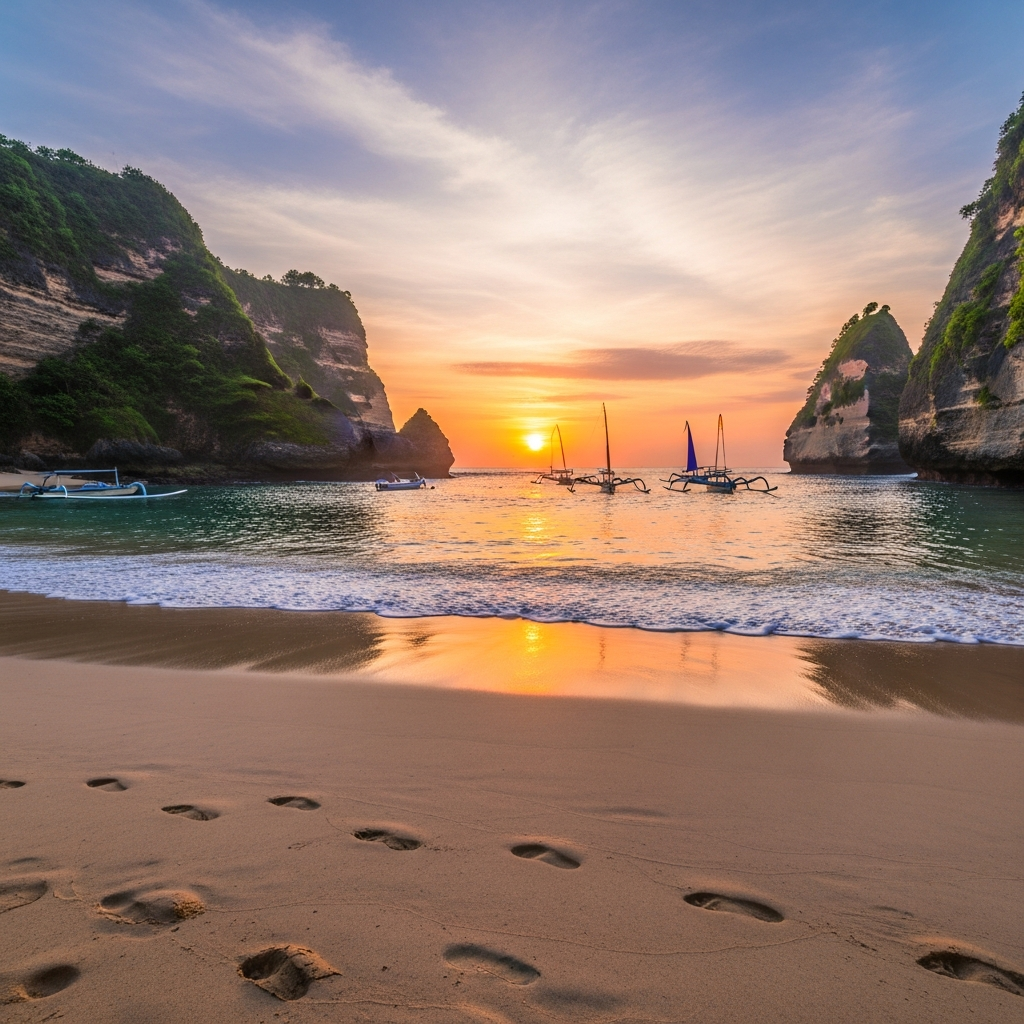
3. Nyang Nyang Beach Low‑Tide Sprints
Nyang Nyang feels like Uluwatu’s untamed side. The beach is long, open, and often far quieter than the more accessible stretches. So, if the goal is uninterrupted intervals—short sprints, floating strides, or a fast-finish progression—this route delivers.
But it’s not effortless to reach. Access involves a steep descent down from the cliff, which is part of the experience and also part of the planning. Several guides describe the approach as a steep stair or path down to the sand (Jonny Melon; Compasses and Quests). That means the run starts before the run, and the climb back out hits like bonus hill work.
Also, entry fees can vary. Multiple sources describe donation-based entry at the parking area, while others report small fixed fees such as around IDR 5,000 per person and separate parking of around IDR 2,000. Because it changes on site, small cash is essential (Sunshine Seeker; The Bali Sun; 30 Sundays Club).
Now, tide timing is everything here. At lower tide, the sand firms up and opens a longer runnable strip. At higher tide, water pushes you into softer sand and uneven patches. So, check the Uluwatu tide chart before committing to the descent (Surfline).
A smart workout looks like this:
- Warm up easy for 10–15 minutes on firmer sand.
- Run 6–12 x 30–60 seconds fast, with easy jog recovery.
- After that, cool down fully before the climb back.
4. Jimbaran Bay Long Beach Run
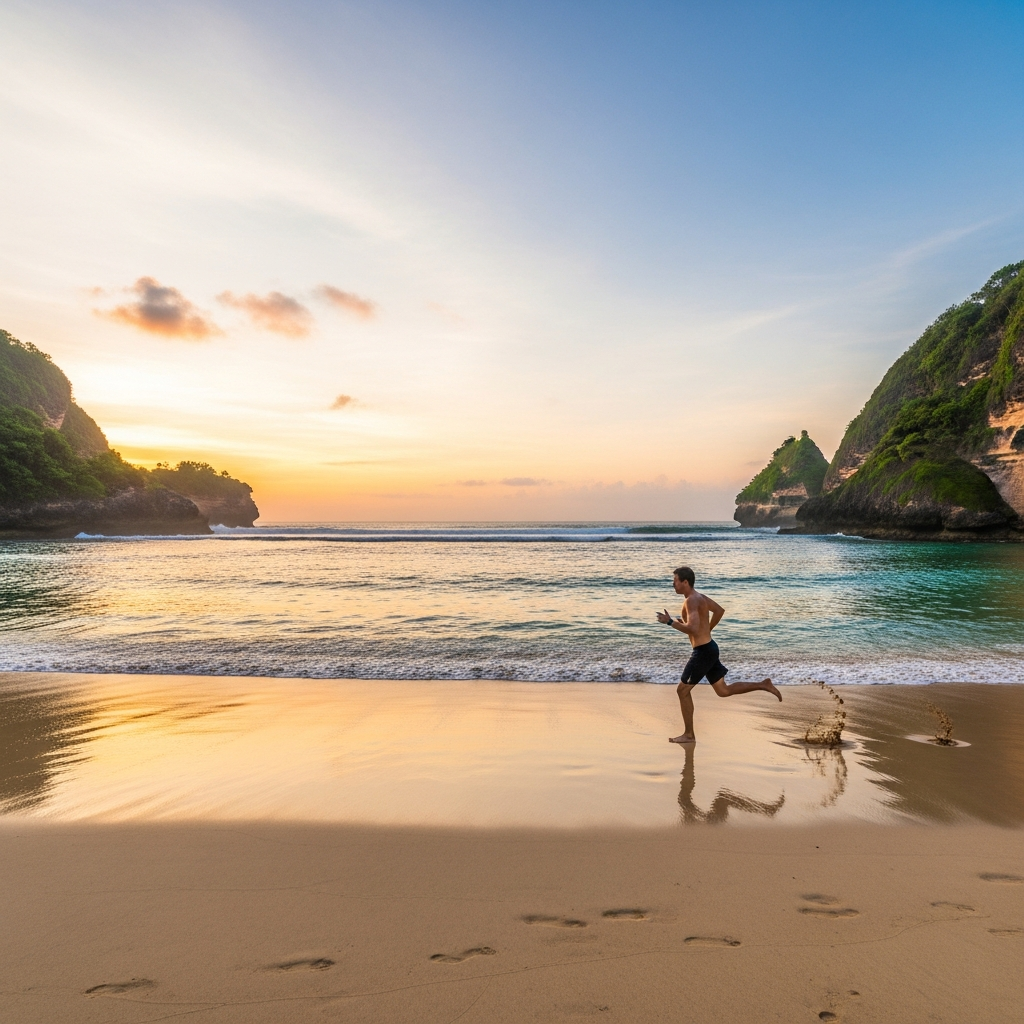
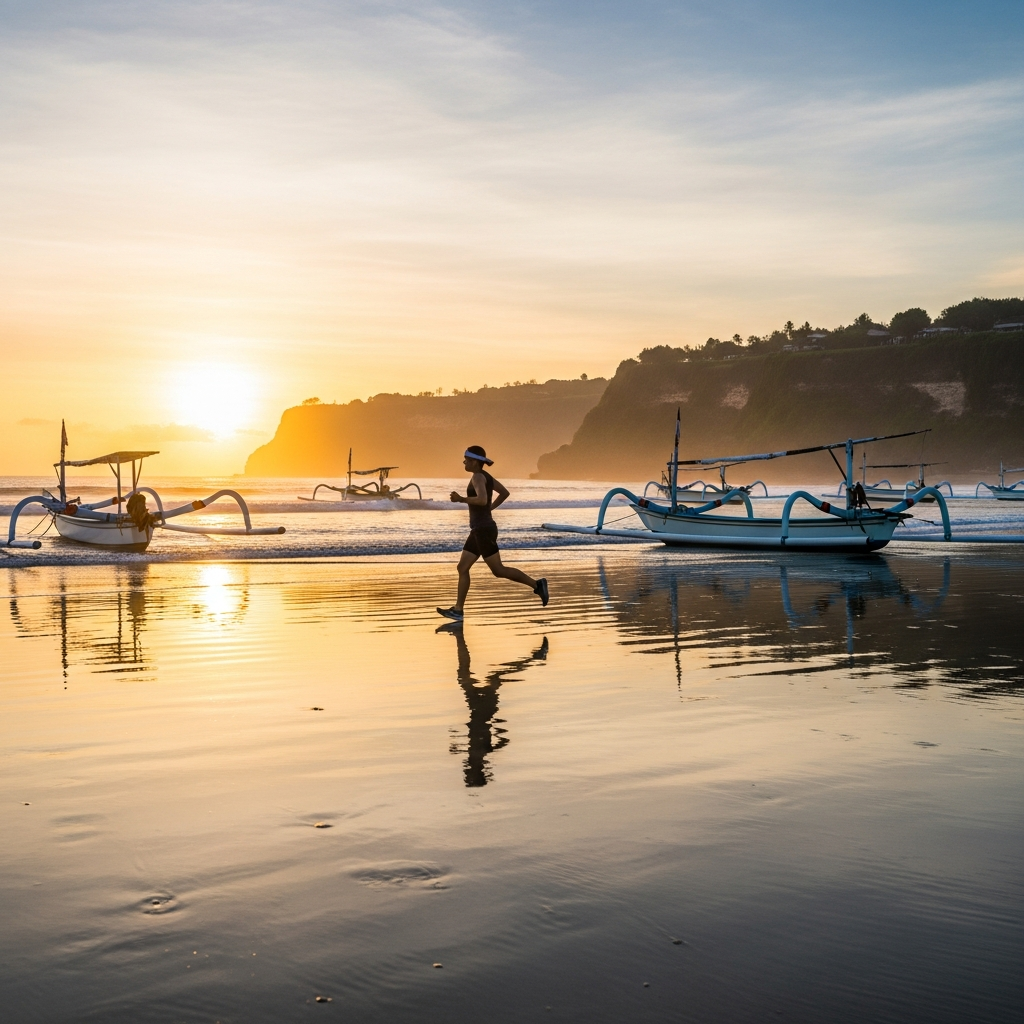
Jimbaran Bay is the reliable “lock in and cruise” run near Uluwatu. The sand is broad and the grade is flat, which makes it much easier to hold a steady pace than on cliff access roads or soft, shifting beaches. So, this is a strong choice for long runs, marathon-style steady efforts, or relaxed recovery jogs with a view.
Also, Jimbaran works when tides are less cooperative elsewhere. Even when you can’t get perfect low tide in Uluwatu, you can often find a runnable line closer to the water here and still get a quality session.
Distance planning is refreshingly clear. A runner guide suggests you can cover 4–6.5 km around Jimbaran Bay from the InterContinental Bali area, with the option to continue north toward the airport/Segara side for about 7 km one way (FINNS Beach Club guide). That makes it easy to build a 10–14 km day with an out-and-back.
Next, go early for comfort. Sunrise runs bring cooler air and fewer people setting up on the beach. Plus, the light over the bay turns the water into a silver mirror, and the fishing boats give the whole scene a gentle rhythm.
Practical tips that matter:
- Choose shoes you don’t mind getting sandy, because wet sand finds its way everywhere.
- Carry a small bottle or plan a quick stop, since heat builds fast after morning.
- Keep eyes up for beach activity zones, especially later in the day.
Then, treat the run like a coastal tour. Start easy, settle into tempo, and finish with a few relaxed strides once the body feels smooth. It’s simple, but it works.
5. Nusa Dua ITDC Promenade Loop
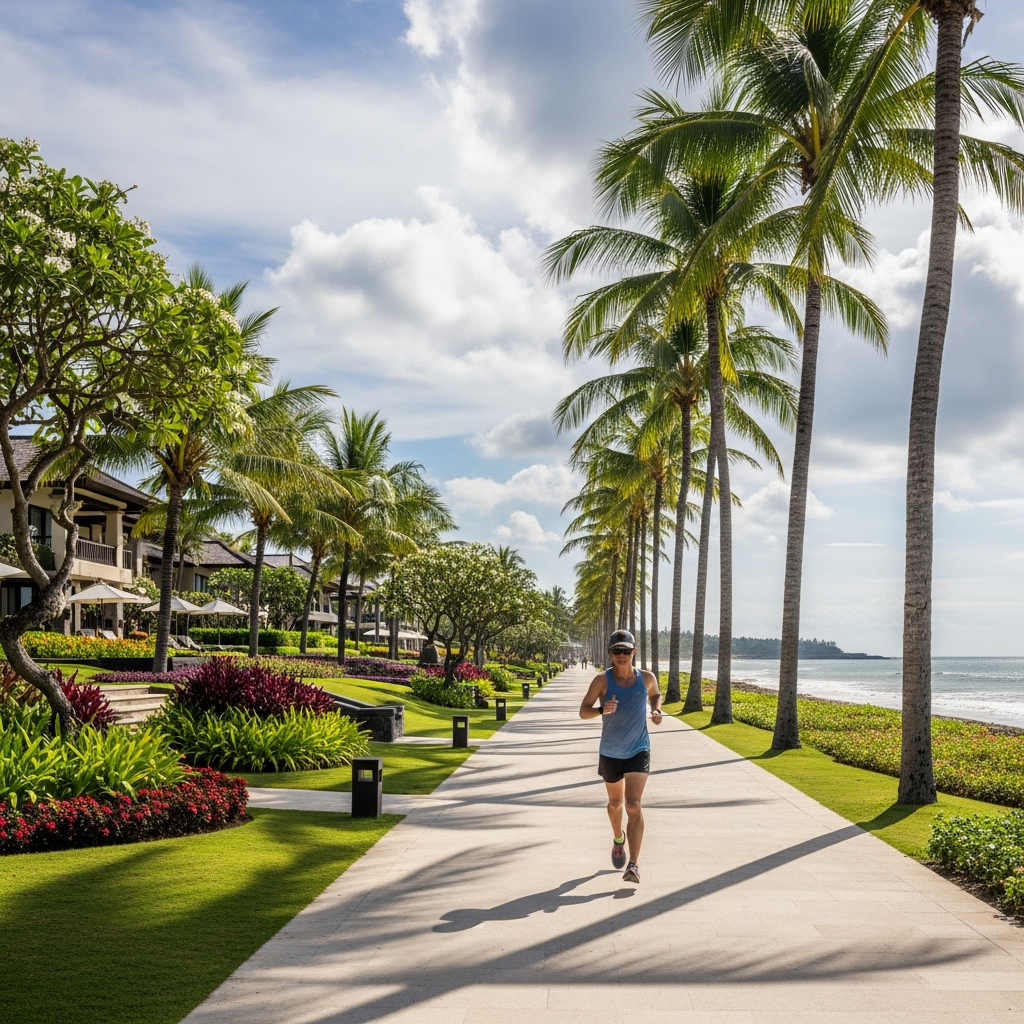
When you want pavement, predictability, and fewer surprises, Nusa Dua’s ITDC area is a gift. The resort zone is known for landscaped roads and beachfront paths, and local roundups regularly list ITDC as a top jogging spot (What’s New Indonesia). So, this is the place to go when Uluwatu’s narrow roads feel too sketchy.
Also, it’s perfect for runners who like measured loops. AllTrails maps a 3.1-mile (5 km) Nusa Dua Beach route, which gives a helpful reference for building sessions: one loop for recovery, two loops for a solid daily run, and three loops when you want to stack easy volume (AllTrails).
Plus, the ITDC vibe is calm. You’ll often share the path with walkers, cyclists, and other joggers rather than scooter traffic. That alone makes it feel mentally lighter, especially if road running in Bali is new.
Now, make the most of the setting with structured variety:
- Easy day: 5 km loop at conversational effort, finish with stretching in the shade.
- Workout day: 10-minute warmup, then 3 x 8 minutes steady with 2 minutes easy, cool down.
- Long day: 2–3 loops with a negative split, keeping the first loop deliberately relaxed.
Because this is a polished area, it’s also easier to plan the “run + brunch” combo. After that, a short drive back to Uluwatu still leaves plenty of time for beaches, pools, and sunset viewpoints.
6. Early‑Morning Jl. Labuan Sait Road Loop
Jl. Labuan Sait is the backbone road that connects key Uluwatu areas like Padang Padang and Bingin, weaving past cafes, surf turn-offs, and villa lanes. So, if you prefer tarmac, this is one of the most obvious places to run in Pecatu—especially when it’s quiet.
Also, the road name matters for mapping. Listings and addresses along the route confirm the Jl. Labuan Sait location in Pecatu (MapQuest; Corner.inc). That helps when pinning a start point near your stay or choosing a turnaround near a beach access road.
But here’s the reality: many Uluwatu roads are narrow and hilly, and sidewalks can be limited. Local feedback highlights exactly that, with a reminder to go early and stay visible (Reddit BaliTravelTips). So, timing is the safety strategy.
Best practices for this route:
- Go before 7:00 am to avoid peak traffic.
- Wear high-visibility gear and avoid headphones at high volume.
- Run single-file in groups and choose the safest shoulder possible.
Next, treat this as an undulating road run. The hills come in waves, so effort control is key. Keep climbs steady, relax the shoulders on descents, and aim for smooth form rather than speed.
Plus, this road run pairs well with community routes. Rise Run Bali’s Uluwatu sessions are often described as hilly, which fits the Labuan Sait terrain style (Rise Run Bali Schedule).
7. Why Balangan Beach Isn’t Ideal for Running
Balangan wins on looks. The cliffs and surf breaks create a classic Uluwatu postcard. But for running, it’s usually the wrong tool for the job.
First, the sand can be deep and soft, which makes steady jogging feel like running in place. And once fatigue hits, form can collapse fast, which raises the risk of sore calves and achy ankles. Also, exposed reef sections can make footing unpredictable, especially if you drift too close to tide pools or reef plates.
One local guide notes that Balangan’s conditions—deep sand and exposed reef—make it very difficult for steady jogging, even at lower tides (Bali.live). So, it’s better approached as a scenic walk or a short, careful beach shuffle.
Still, Balangan can fit into a runner’s day in a smarter way:
- Walk it as an active recovery session.
- Add a few short uphill bursts on nearby access paths if safe.
- Then, save “real running” for Melasti, Pandawa, or Jimbaran.
Also, tide awareness still matters for exploring. So, check Uluwatu tide context before wandering across reefy sections (Surfline).

8. Join a Local Uluwatu Group Run
Running in Uluwatu gets easier the moment it becomes social. Group runs solve two big challenges at once: route uncertainty and road safety. And because Uluwatu can be hilly, it’s also motivating to share the effort.
Rise Run Bali hosts community runs in Uluwatu and Canggu, with 4 km and 8 km options, plus clear notes that Uluwatu routes are hilly (Rise Run Bali; Rise Run Bali Schedule). So, it’s approachable whether you want a short shakeout or a solid morning session.
Also, events pop up that add extra energy to the calendar. One example is the Tamora Sunset Run 5K in Uluwatu (24 Jan 2026), which shows how active the local running scene is becoming (Bali Buddies).
Why group runs work so well here:
- Routes are chosen for safer timing and better visibility.
- Pace options mean less pressure and more enjoyment.
- Post-run coffee plans happen naturally, which turns a workout into a highlight.
Plus, the local knowledge is priceless. Runners share which roads have new construction, which beach access points are open, and which mornings have temple ceremonies or heavier traffic. In a place like Uluwatu, those small details can make the difference between a smooth run and a stressful one.
Tides, Safety & Local Tips for Runners
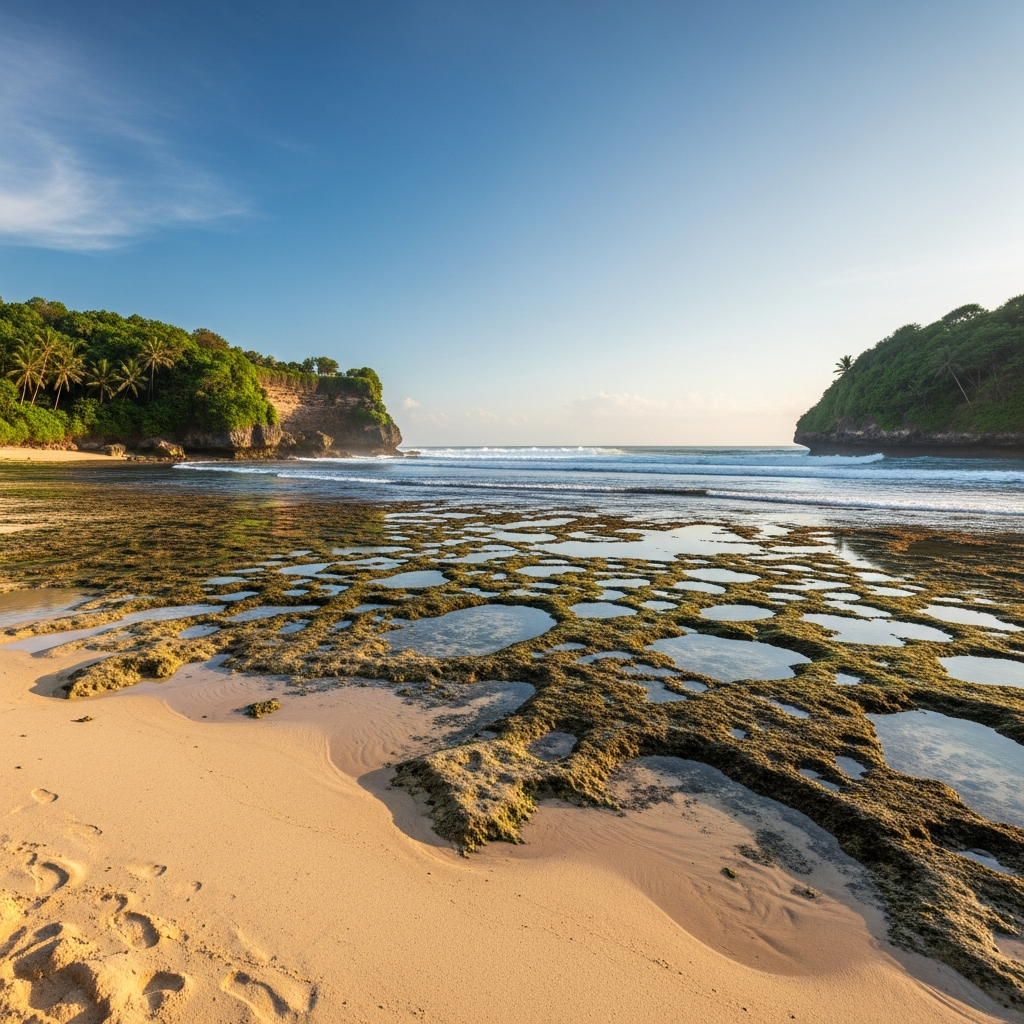
Tides are the secret key to beach running in Bali. At low tide, the sand near the waterline often firms up and becomes far more runnable. At higher tide, you’ll usually fight soft sand and awkward angles. So, it’s worth checking live tide charts before committing to Melasti, Pandawa, or Nyang Nyang.
Helpful tide tools include Surfline’s Uluwatu tide chart (Surfline Uluwatu) and a separate chart for Nusa Dua when that’s the day’s plan (Surfline Nusa Dua). Then, plan your run window so the best sand lines up with your workout.
Also, road safety in Pecatu deserves respect. Narrow lanes and limited shoulders mean early timing is the best defense. Local feedback recommends pre-7 am starts, high-visibility gear, and single-file running where space is tight (Reddit BaliTravelTips).
Next, if a route ends near the Uluwatu Temple viewpoint areas, keep valuables secure. The official site warns visitors to maintain distance and secure belongings around wildlife, including the famous monkeys (Uluwatu Temple Conservation & Wildlife). So, stash sunglasses, avoid dangling headphones, and keep phones firmly in hand.
Finally, plan around Bali’s cultural calendar. Nyepi (Day of Silence) is Thursday, March 19, 2026, and the rule is simple: no outdoor activity or travel across the island, including running (Kemenag holiday list PDF; Time and Date Nyepi overview). So, schedule workouts for the days around it and treat Nyepi as a built-in recovery day.
Conclusion & Runner’s Game Plan
Uluwatu can be mellow or intense, and that’s exactly why it belongs in any shortlist of the Best routes to run in Bali. First, pick Pandawa for the easiest sunrise beach rhythm, especially when you want facilities and a simple out-and-back. Next, choose Melasti when the goal is strength—hill repeats on limestone switchbacks, followed by a salty sand cooldown. Then, save Nyang Nyang for low-tide speed sessions when you crave quiet and space.
Also, build distance smartly. Jimbaran Bay offers the long, flat beach miles that are hard to find on the Bukit’s rolling roads. And when you want predictable footing, Nusa Dua’s ITDC promenade delivers calm loops with a mapped 5 km reference to guide pacing (AllTrails; What’s New Indonesia).
Finally, make it fun. Join a Uluwatu group run for instant community and safer route choices (Rise Run Bali). Then, book that stay near the coast, set an early alarm, and let Bali’s most dramatic shoreline turn training into the highlight of the trip.
Sources
- Water Sports Bali (Melasti entrance fee)
- Lokasi Bali (Melasti road description)
- Tropical Temptation Beach Club
- Surfline (Uluwatu tide chart)
- Traveloka (Pandawa hours/address)
- The Bali Sun (2026 fee reporting)
- Detik Bali (2026 tariff details)
- Roosterfish Beach Club
- Roosterfish contact/location + hours
- Roosterfish FAQs (older fee reference)
- Jonny Melon (Nyang Nyang access)
- Compasses and Quests (Nyang Nyang access)
- Sunshine Seeker (Nyang Nyang fees vary)
- 30 Sundays Club (Nyang Nyang info)
- The Bali Sun (Nyang Nyang overview)
- FINNS Beach Club (Jimbaran distances)
- AllTrails (Nusa Dua Beach 5 km reference)
- What’s New Indonesia (ITDC jogging spot)
- MapQuest (Jl. Labuan Sait reference)
- Corner.inc (Jl. Labuan Sait reference)
- Reddit BaliTravelTips (Uluwatu road caution)
- Bali.live (Balangan running caution)
- Rise Run Bali
- Rise Run Bali schedule
- Bali Buddies (Tamora Sunset Run 5K)
- Uluwatu Temple (wildlife advice)
- Surfline (Nusa Dua tide chart)
- Kemenag holiday list PDF (Nyepi 2026)
- Time and Date (Nyepi overview)